Fintech & Payments
How We Took Payomatix From Brand to Live Payment Platform
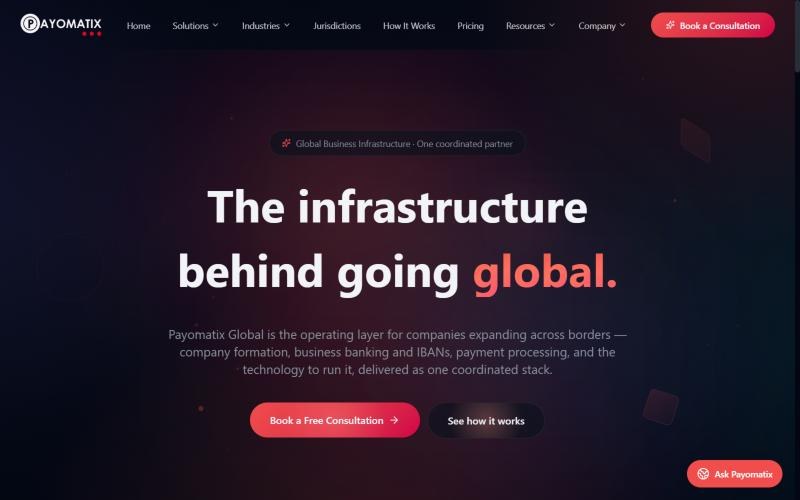
Payomatix needed a full payment platform with role-based dashboards, all connected to a backend CRM. We built it end to end and took them from branding through to live, and the platform now serves 500+ clients.
- 500+
- clients on the platform
- ~100k
- transactions processed
- Brand to live
- full end-to-end build
The brief
The challenge
Payomatix needed a complete payment platform: a web application and dashboards wired into a backend CRM and team-operations layer, so every stakeholder could work from their own connected view. End users, the administrative team and client representatives all had to meet in one system rather than a scatter of disconnected tools. They wanted one partner to take it from idea to a compliant, live product.
How we delivered
Our approach
- 1
Designed and built the platform end to end: the web application, payment processing and orchestration, a white-label gateway, billing, and multi-role dashboards
- 2
Connected end users, the admin team and representatives through a shared backend CRM, so every stakeholder works from one system
- 3
Engineered to payments-grade compliance from the start, built for PCI-DSS Level 1 and RBI, NPCI and GDPR requirements on PHP, Laravel, React and AWS
- 4
Handled go-to-market too: logo and brand design, brand positioning, on-page SEO and social media setup
- 5
Took the product from branding through design, development, testing and launch as a single build
What we built
Inside the platform
Payomatix is a full-suite payment platform for businesses that need to accept, route and manage payments at scale. It gives merchants and payment teams processing, orchestration and a white-label gateway, with connected dashboards for end users, administrators and representatives all working from one system. It is engineered to payments-grade compliance, built for PCI-DSS Level 1 and the relevant RBI, NPCI and GDPR requirements, and now serves more than 500 clients. The platform runs on PHP, Laravel, React and AWS.
Payment Processing
Accept and settle payments across methods and currencies through one platform.
Payment Orchestration
Route each transaction to the best provider for cost and success rate.
White-Label Gateway
A brandable payment gateway that partners can run as their own.
Billing & Subscriptions
Recurring billing and invoicing built into the platform.
Multi-Role Dashboards
Connected views for end users, the admin team and representatives.
CRM & Team Operations
A backend CRM that ties every stakeholder and operation together.
The outcome
The results
Payomatix launched as a complete, compliant payment platform and has performed strongly since. It now serves more than 500 clients and has processed around 100,000 transactions in volume. Because we owned the whole journey, from brand and positioning through development to launch, the product went to market with a consistent identity and a payments-grade technical base rather than a stack stitched together from several suppliers.
- 500+ clients running payments on the platform
- ~100,000 transactions processed in volume
- Delivered brand to go-live as one build: branding, platform and compliance
Questions
Frequently asked questions
- What did Anviam build for Payomatix?
- The full payment platform end to end: processing, orchestration, a white-label gateway, billing and multi-role dashboards, plus the brand and go-to-market, built for PCI-DSS Level 1 and the relevant RBI, NPCI and GDPR requirements.
- How much does it cost to build a payment platform?
- A lean MVP typically starts around £30,000 and a full compliant platform runs to £400,000 or more. Compliance scope and whether you build your own payment rails drive the number far more than feature count.
- What technology is the platform built on?
- PHP, Laravel, React and AWS, with payment orchestration and a white-label gateway on top.
Free growth audit
Growth begins with
the right partner
Share your site and within five working days you'll have a prioritised growth audit, the opportunities you're missing and a realistic path to compounding organic and AI visibility.